
Custom Rubber Parts for Medical Devices: FDA & ISO Compliance Guide
Author: Site Editor Publish Time: 2026-06-05 Origin: Site
Why Material Selection Matters for Medical Rubber Parts
Medical devices demand the highest standards of material quality and consistency. Unlike industrial rubber parts, components used in healthcare applications must meet strict biocompatibility requirements, withstand repeated food-grade and medical silicone products cycles, and maintain precise dimensional stability over their service life.
From silicone seals in diagnostic equipment to rubber gaskets in drug delivery systems, the choice of material directly impacts patient safety and device reliability.
Key Regulations and Standards
ISO 10993: The primary standard for biological evaluation of medical devices. Covers cytotoxicity, sensitization, irritation, and systemic toxicity testing. Any rubber material used in medical devices must comply with ISO 10993-1 through ISO 10993-18.
FDA 21 CFR 177.2600: US FDA regulation for rubber articles intended for repeated food and medical contact. Specifies extractables testing and permissible material formulations.
USP Class VI: The highest level of biocompatibility testing for plastics and elastomers used in medical devices. Requires passing in vivo biological reactivity tests.
REACH and RoHS: European regulations restricting hazardous substances in medical device components. All materials must comply with applicable substance restrictions.
Best Materials for Medical Rubber Parts
Silicone (LSR and HCR): The most widely used elastomer for medical devices. Liquid Silicone Rubber (LSR) is ideal for high-volume injection-molded parts. High Consistency Rubber (HCR) works well for compression-molded components. Silicone offers exceptional biocompatibility, temperature resistance, and flexibility.
EPDM: Suitable for medical device gaskets and seals that require good chemical resistance and sterilization tolerance. Often used in diagnostic equipment and fluid handling systems.
FKM/Viton: Used in applications requiring chemical resistance to aggressive cleaning agents or sterilization methods. Common in surgical instrument seals and pharmaceutical processing equipment.
Common Medical Rubber Components
Custom Rubber Parts used in medical devices include: silicone seals and gaskets for diagnostic equipment, rubber stoppers for vials and syringes, silicone tubing connectors, diaphragm seals for pumps and valves, keypad buttons for medical control interfaces, and custom-molded silicone components for wearable devices.
Sterilization Compatibility
Medical rubber parts must withstand repeated sterilization. Silicone performs well across all common methods: autoclave steam sterilization (121°C to 134°C), ethylene oxide (EtO) gas, gamma radiation, and electron beam (e-beam). EPDM and FKM also tolerate steam and EtO sterilization but may degrade under repeated high-dose radiation exposure.
Quality Control Requirements
Medical rubber parts require stricter quality controls than industrial components. Key QC measures include: 100% dimensional inspection for critical features, batch-specific material certification with full formulation disclosure, extractables and leachables testing per ISO 10993, cleanliness validation for particulate and biological contamination, and lot traceability from raw material through finished product.
Why Anlintech for Medical Rubber Parts
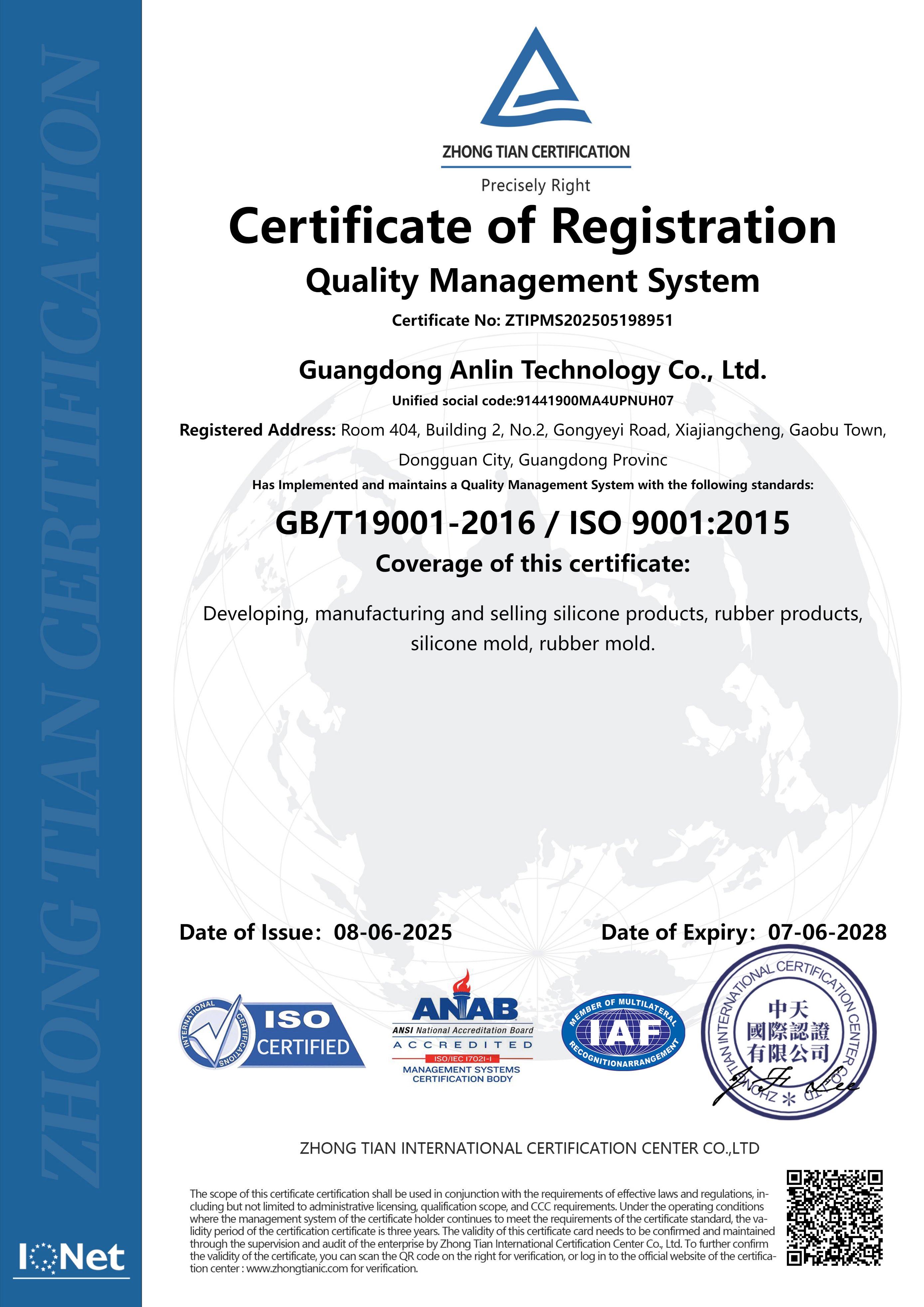
Anlintech manufactures custom rubber and silicone components suitable for medical device applications. Our ISO 9001:2015 certified facility in Dongguan, China maintains strict quality control protocols. We work with FDA-compliant silicone and rubber materials and can provide material certification documentation for your regulatory submissions. Contact us to discuss your specific requirements and compliance needs.
Learn more about our medical grade Silicone Rubber Parts.